
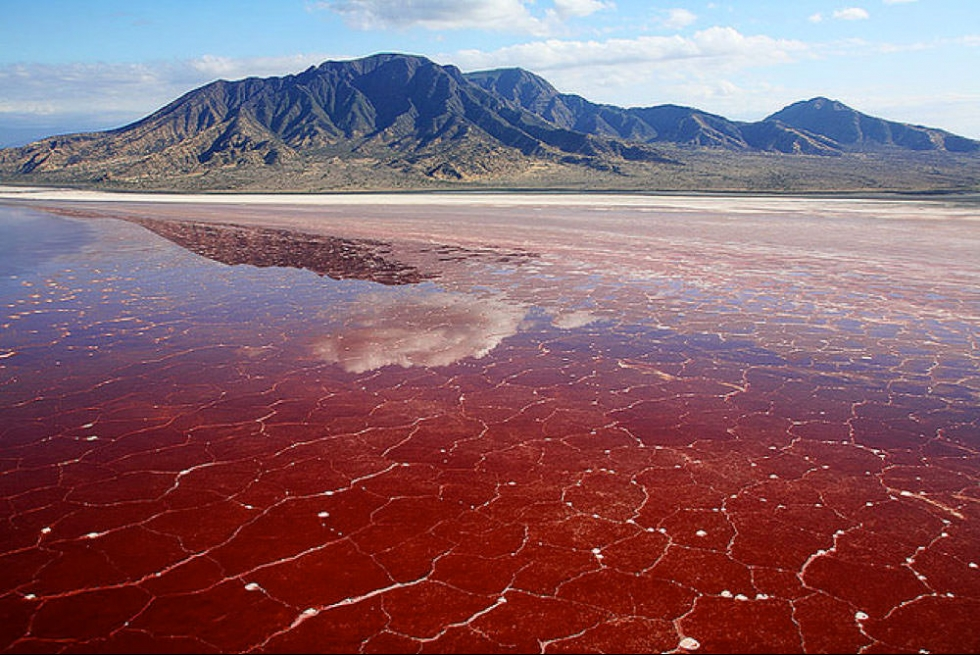
In northern Tanzania, at the foot of the Great Rift Valley, lies one of Africa’s most surreal and mysterious natural wonders: Lake Natron. This shallow, salt and soda lake is both stunning and extreme—its waters can reach temperatures of up to 60°C (140°F) and are highly alkaline, with a pH as high as 10.5. To most animals, Lake Natron is deadly, but to some species, it is a sanctuary.
A Deadly Beauty
Lake Natron’s striking red and orange colors come from salt-loving microorganisms that thrive in its waters. At times, the surface looks more like a Martian landscape than part of Earth. The extreme alkalinity can burn skin and eyes, and any bird or animal that accidentally falls into the lake may calcify, preserved like a natural sculpture. Photographs of these “stone animals” have fascinated and spooked people around the world.
Flamingo Sanctuary
Surprisingly, this seemingly inhospitable lake is the only significant breeding ground for 75% of the world’s lesser flamingos. Every year, hundreds of thousands of flamingos gather at Lake Natron to nest on the salty crust. The high alkalinity actually protects their eggs, keeping predators away. For the flamingos, what is deadly for others becomes a safe haven.
Cultural and Ecological Importance
For the local Maasai communities, Lake Natron is not just a landmark but a source of cultural stories and ecological pride. Protecting the lake means preserving both biodiversity and heritage. However, the area has faced threats from proposed industrial projects that could disrupt this delicate ecosystem.

A Symbol of Africa’s Extremes
Lake Natron is a reminder of Africa’s extraordinary natural diversity. It is a place where life and death coexist in dramatic fashion, and where beauty emerges from the most unlikely conditions. For travelers, scientists, and conservationists alike, Lake Natron remains one of Africa’s most fascinating mysteries.


