
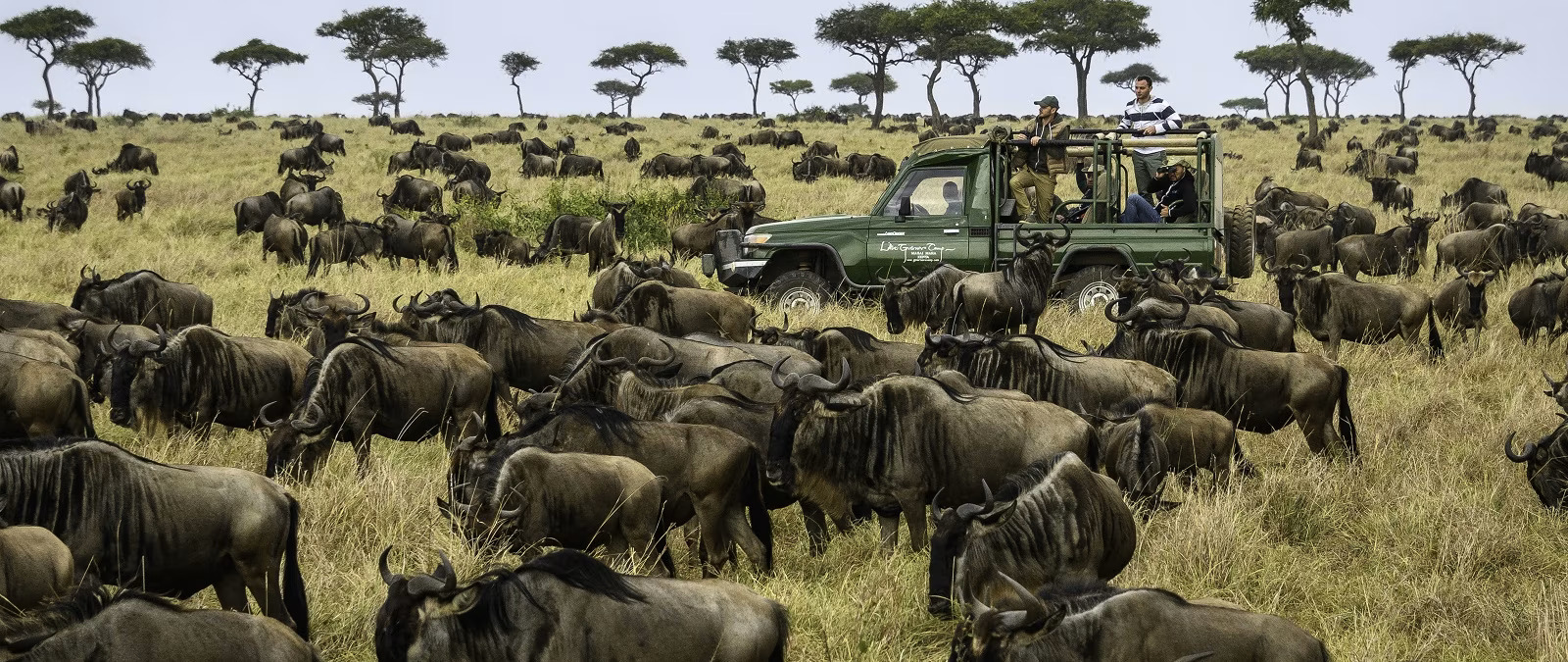
Every year, the vast plains of East Africa witness a spectacle unlike anywhere else in the world—the Great Migration. Over 1.5 million wildebeest, accompanied by hundreds of thousands of zebras and gazelles, journey in a circular path across the Serengeti in Tanzania and the Maasai Mara in Kenya. It is a cycle of life, death, and renewal that has been called the “greatest wildlife show on Earth.”
A Journey Fueled by Survival
The migration is driven by a simple force: the search for fresh grazing land. The wildebeest follow the rains, moving from the Serengeti’s southern plains in Tanzania to the lush grasses of the Maasai Mara in Kenya, before circling back again. This journey covers nearly 1,800 miles each year.
The River Crossings

The most dramatic and dangerous part of the migration happens at the Mara River. Here, wildebeest plunge into crocodile-filled waters, driven by instinct and the need to reach greener land. The crossings are chaotic and often tragic, but they ensure the survival of the herds. For predators like lions, leopards, and hyenas, the migration is also a feast, and the plains erupt with life-and-death drama.
A Global Treasure
The Great Migration is not just an African wonder—it is a global one. Tourists and filmmakers from all over the world travel to witness the event, bringing vital income to local communities and reinforcing the need for conservation. Protecting these ecosystems ensures that future generations can continue to marvel at this natural wonder.

More Than a Migration
The journey of the wildebeest is more than a spectacle of movement. It is a symbol of resilience, the balance of ecosystems, and the eternal rhythm of nature. From thundering hooves shaking the ground to silent moments of grazing under the African sun, the Great Migration remains one of the most awe-inspiring events on Earth.


